





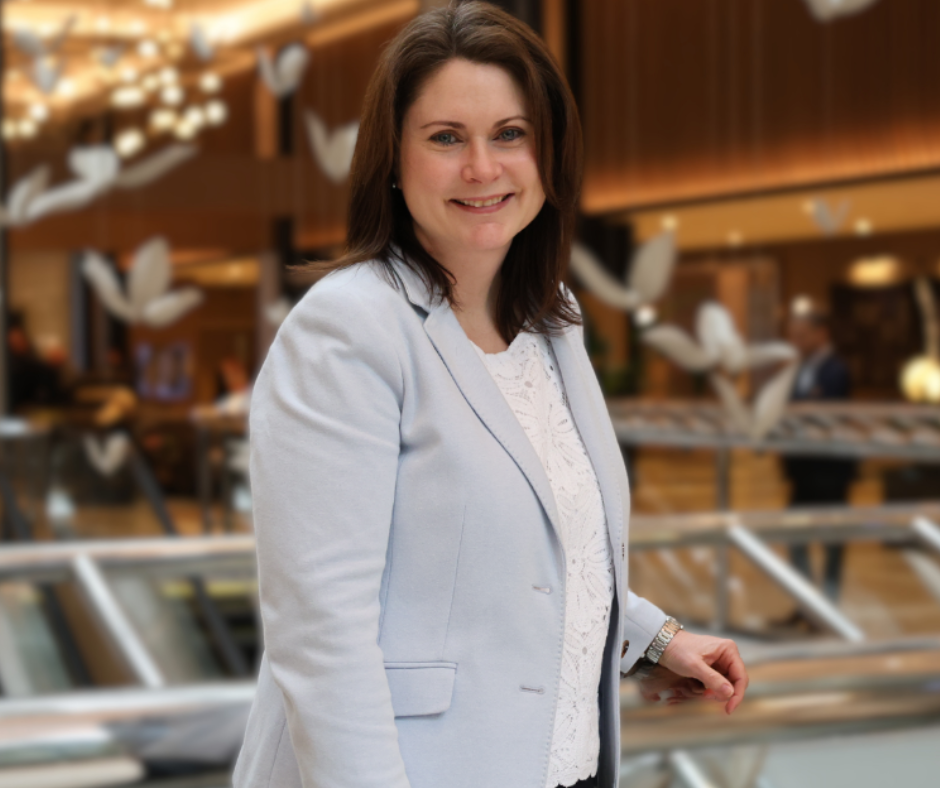
By: Amy Porath
I’ve spent most of my career looking for answers in data, research and the real-life experiences of young people and families. I love the clarity they provide in a system that often feels complicated.
At the Knowledge Institute, we take those insights and turn them into tools and resources that help strengthen services and support change across the system. I’ve been doing this long enough to know that a single resource won't change a young person's life. It can support the work, but it’s people who bring it to life.
Last week, I was in Toronto for the CMHO conference. The theme was Interwoven, a fitting way to describe the puzzle our sector can feel like. We each hold a different piece. And when we come together, the goal isn’t just to talk about them. It’s to start fitting them together so young people and families don’t have to do it alone.
And that requires honesty about where we're falling short.
Cindy Blackstock opened the first day with a keynote that really stayed with me. Not just what she said, but what it asked of us.
Because giving every young person the same service means very little if it doesn’t work in their real life, in their real circumstances. Equal isn’t the same as effective.
She described her approach to advocacy for First Nations children and young people as Mosquito Advocacy. Create the buzz (have an infectious message), build a swarm (engage others), avoid the swat (use more than one approach) and bite (have a clear target). As an avid gardener living in rural Ottawa, this metaphor resonated with me.
Mosquitos are small, persistent and impossible to ignore.
In my world, we talk about knowledge mobilization as a collaborative process. Cindy reminded me it's also an act of persistence. You find the gap. You work with others to fill it. You show up. And you buzz.
That idea carried through the rest of the conference.
In conversations about meaningful youth engagement, not just inviting young people into the room, but designing systems with them.
In discussions about how families are still too often left to navigate services on their own.
And in the recognition that young people move across systems (education, health, child welfare) whether those systems are connected or not.
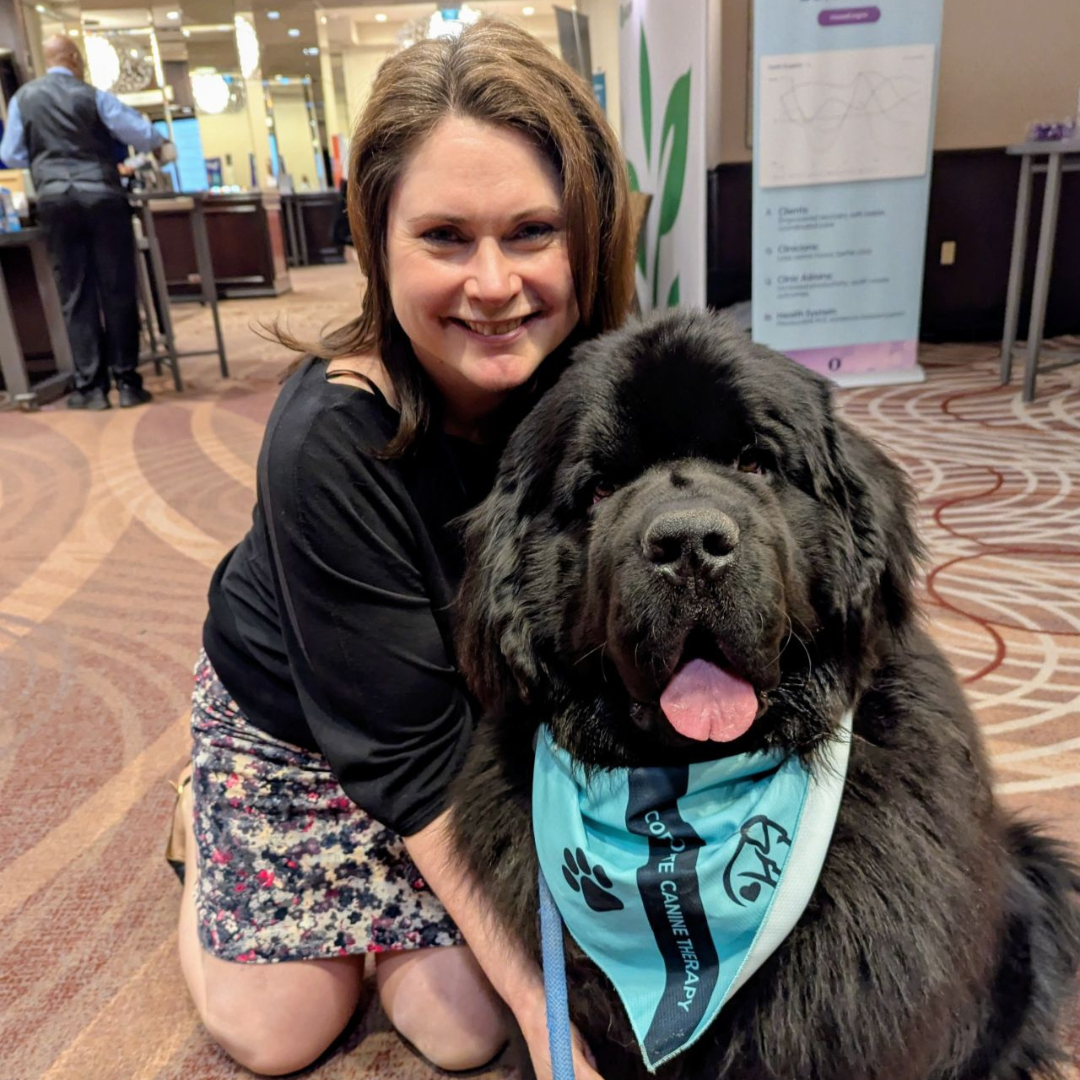
Then I met Marmite, a Newfoundlander therapy dog. Essentially a giant soft ball of fluff. The weight of these conversations can feel heavy and sometimes you need somewhere to put it down. I travel a lot for work and always miss my own dog, Maple, when I’m away. Spending a few minutes with Marmite was exactly the reset I didn’t know I needed. A small moment, but one I appreciated more than I expected.
On day two, a panel of system leaders moved past the safe answers. The conversation shifted toward what it would take to build a system that works. Using data to guide decisions, designing services that are easier to navigate, and moving upstream so we’re not always responding in crisis.
There was also a clear message about lived and living expertise. Not as a checkbox or a courtesy, but as something that should shape how we design care from the start. And a recognition that no single approach will work everywhere. The system needs to be flexible enough to respond to different communities and realities.
I saw that in action with TAIBU Community Health Centre, who are using an Africentric model to strengthen Black youth mental health. They receive support through our Innovation Initiatives program and seeing their work recognized felt like a full-circle moment.
I left Toronto with the right kind of tired.
My job can feel abstract sometimes. You bring people together, study the research, develop the resources and send them out into the world, hoping they land where they’re needed.
At CMHO, I heard directly from partners that our work is informing theirs. That it's landing and that it matters.
That’s what keeps me going. It’s a reminder of how far our sector has come. The work is still complex. But there is a shared commitment to keep showing up, keep pushing and close the gaps that we know are there.
Because people are willing to be the mosquito.
Small, persistent and impossible to ignore.


 Back to Search
 Subscribe